
From the Desk of Senator Drey
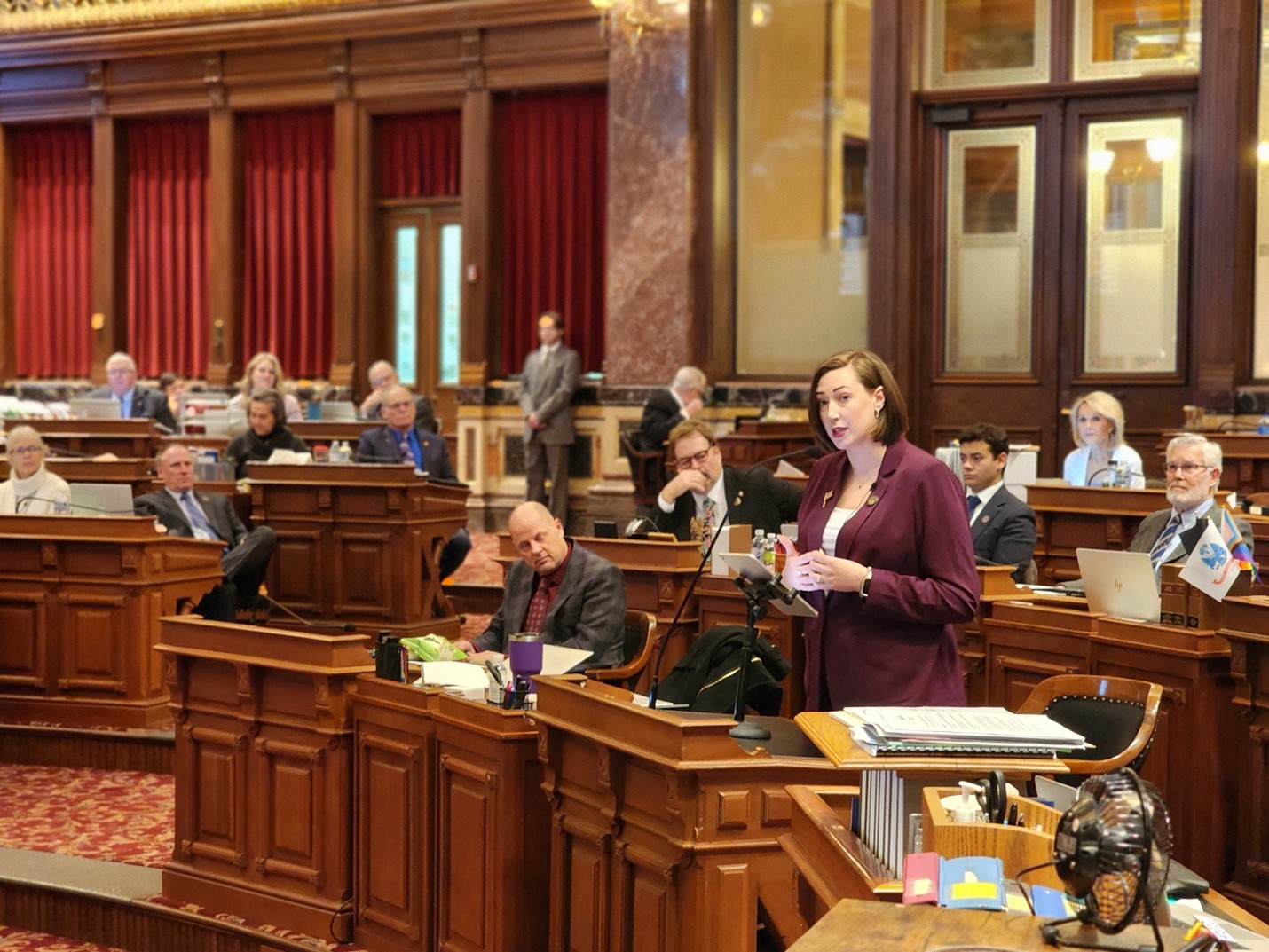
Senator Drey shares her cancer diagnosis on the Iowa Senate floor, Monday, January 26.
You may have heard by now — I have cancer.
On Monday, I stood on the Iowa Senate floor to share that I was diagnosed with stage one uterine cancer. Since then, I have had surgery, and I am relieved to report that it went very well. I am deeply grateful to my doctors, my family, and to everyone who sent messages, meals, prayers, and kindness. It carried me more than you know.
Cancer does not care who you are, who you love, what you do for work, or how much money you make. It is a cold, indifferent bully, and nearly every Iowan has felt its impact. I was fortunate that early detection and access to care made this diagnosis manageable. Too many people do not get that chance, and that reality strengthens my resolve to fight for a health care system that works for everyone.
I chose to share my diagnosis publicly because silence is how broken systems survive. I will not be quiet about the fear, exhaustion, or the barriers people face just trying to get care.
I plan to attend my local Democratic caucus Monday evening and hope to return to Senate work on Tuesday.
👉 To view my full speech on the Senate floor, click here.
Thank you for the overwhelming outpouring of support, kindness, and care. I felt it every step of the way, and I will never forget it.
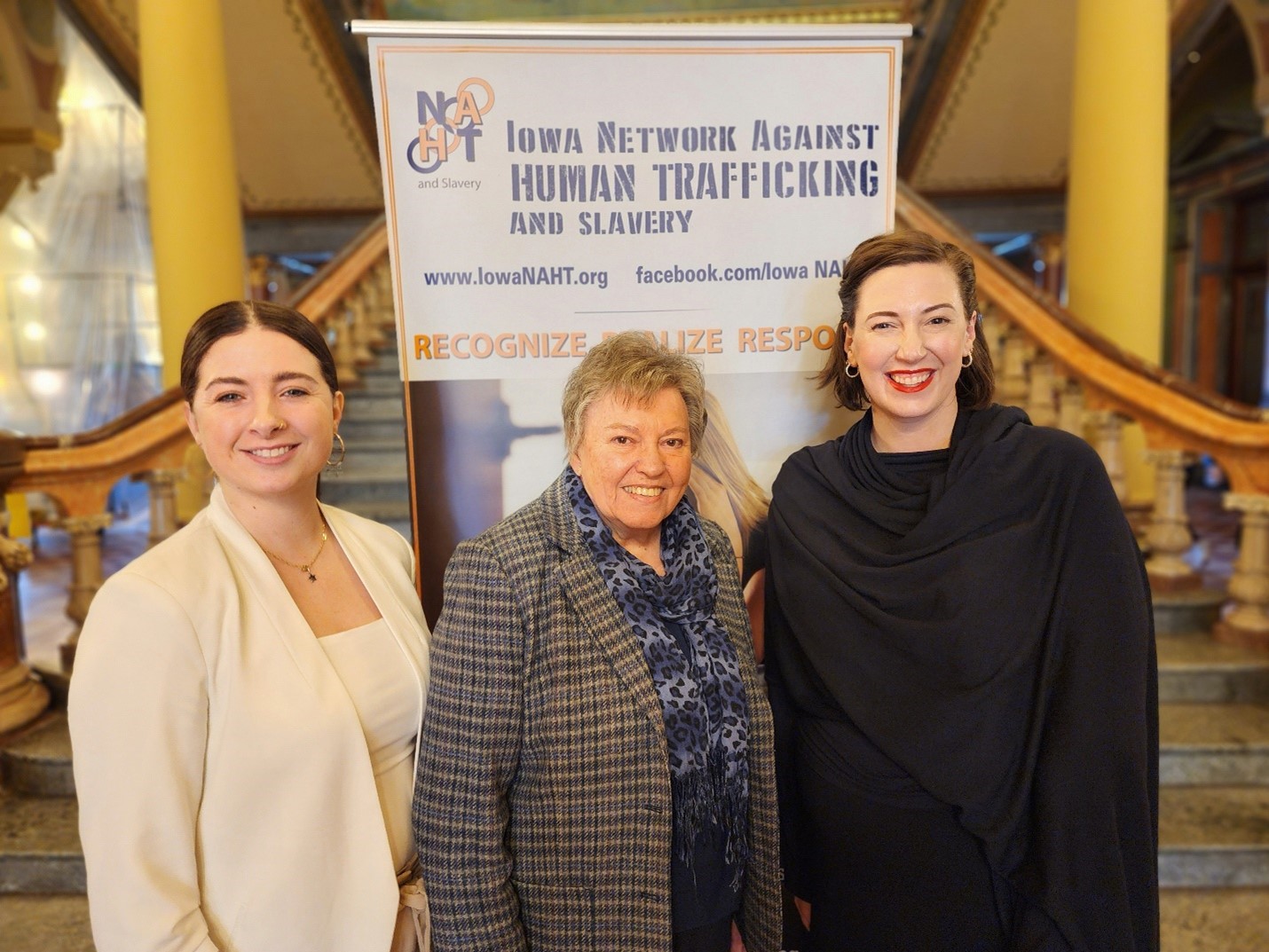
From left to right: Emily Culver, Executive Director of Lila Mae’s House; Sister Shirley Fineran, Founder and Board President of Lila Mae’s House; and Senator Drey after the Governor’s Outstanding Anti-Trafficking Service Awards ceremony in the Capitol Rotunda.
Spotlight: Lila Mae’s House
I was grateful to sit down with Emily Culver, Executive Director, and Sister Shirley Fineran, Founder and Board President, of Lila Mae’s House during their visit to the Iowa Capitol.
Based in Sioux City, Lila Mae’s House provides a safe, supportive home for adult women survivors of sex trafficking. Their mission is centered on healing and restoration — offering trauma-informed care, stability, and the tools women need to rebuild their lives with dignity and independence. This work fills a critical gap in survivor services in northwest Iowa and helps ensure that recovery doesn’t end when immediate crisis care does.
Be sure to save the date! Lila Mae’s House will also host their annual ShamRock the House fundraiser on March 6, supporting their ongoing work with survivors. More information and tickets are available at www.lilamaeshouse.org. Hope to see you there!
Focused on affordability
Our caucus spent 2025 talking to Iowans across the state about the issues impacting their lives. We listened to stories about folks struggling to make ends meet, about lost jobs and low wages, high healthcare costs and unaffordable groceries. We heard how anxious people were about their monthly budgets and how uncomfortable things had gotten.
That’s why Senate Democrats came into 2026 with a clear mission: lower costs and make life more affordable for working families. It’s a no-brainer – at least it seemed that way to us. The obstacle we keep running into is that Republican lawmakers just aren’t on the same page as the rest of us. Our priorities couldn’t be further apart.
Iowans talked to us about the runaway cost of prescription drugs and low access to preventative healthcare. So, we introduced a bill to cap the cost of insulin and another to expand coverage for lung cancer screenings.
Workers told us they were worried about getting paid what they were owed, so we introduced a bill to fight back against illegal wage theft.
Young parents told us they wanted to care for their family members without having to fear they would lose their job, so we introduced a bill on paid family leave.
Iowans sent us to the Capitol to work on the issues that are impacting their lives. While the majority party focuses on culture war distractions, we’re working to lower costs and make life more affordable.
Staying involved in the legislative process
The mechanics of public policy can feel overwhelming, even for those of us working inside of them every day. There are so many different moving parts, so many competing voices and interests, and all kinds of hurdles to clear on the way to helping a bill cross the finish line.
Here’s a quick breakdown of what the legislative process looks like and how you can track the issues near and dear to your heart.

Where do policy ideas come from?
A lot of places! Ideas for legislation can spring from conversations legislators have with their constituents; from examples of bills in other states; from labor organizations, interest groups, research firms, or think tanks; or from a legislator’s own personal experiences.
Here’s where you come in: subcommittees
Subcommittees are the first step of consideration for most bills in the Senate, and they are open to the public – so you can register an opinion on a given issue during its subcommittee hearing. These hearings take place at the Capitol, but Senate subcommittees are also usually streamed online via Zoom (you can find a daily schedule of subcommittees here, click “Agenda” for meeting details and the Zoom link).
- One important note: even if a bill has been assigned to a subcommittee, that does NOT necessarily mean the subcommittee will meet for a hearing. Under the current Republican majority, most bills sponsored by Democrats are assigned to subcommittees that are never scheduled, effectively killing those bills for the year.
Onto the full committee
If a bill is advanced out of a subcommittee hearing, it moves to the full committee for further consideration. In the Senate, we have 17 standing committees focusing on various policy areas. Each committee has between 6 and 20 members, often with specific expertise in that issue area. You can find a full list of Senate committees and their members here. In committee meetings, senators discuss and amend bills before eventually voting on whether to approve them.
- Committees take place in person at the Capitol and are often streamed. While the public is not allowed to speak or directly participate in a committee meeting, you can attend, in person or online, to show public interest.
Time for debate
If a Senate committee votes to pass a bill, it then becomes eligible for floor debate. However, when the bill comes to the floor for debate is up to the Senate Majority Leader, so it could be days or even weeks between passing through committee and debate on the floor. Once a bill is brought up for debate, the bill’s sponsor introduces it, and then all 50 senators have a chance to speak and offer amendments to change it. At the end of that process, senators vote on whether to pass the bill.
- Floor debate is held in the Senate chamber and streamed online. You can watch live debates by clicking here. If you’d like to go back and watch past debates in the archive, you can click here.
The final steps
Once a bill passes the Senate, it has to go through the same process in House. Once a bill has been approved by both chambers, it moves on to the governor. The governor gets final say on all legislation, choosing whether to sign it into law or veto it and send it back to the legislature.
Quick Updates
Eminent domain: Last week, the House debated and passed HF 2104, which would have banned the use of eminent domain for carbon oxide pipelines. That bill advanced to the Senate Commerce Committee where it was altered substantially through an amendment. The amendment erased HF 2104’s language and inserted alternative language to give pipeline companies a wider corridor to communicate with landowners who may be willing to enter into voluntary agreements on easements for access to their property. This new language also maintains a pipeline company’s ability to request eminent domain authority if they are not able to reach voluntary agreements for sites necessary to complete the pipeline route.
AARP Community Challenge Grants: The application period has begun for the AARP Community Challenge grant program. Debuting in 2017, this initiative funds quick-action projects that help communities become more livable by improving public places, transportation, housing, digital connections, and more. To date, the initiative has invested $24.3 million in 2,100 livability projects, with a focus on meeting the needs of adults aged 50 or older. The application deadline is March 4, 2026. You can submit your application or find more information here.
Addressing Childhood Mental and Behavioral Health Issues: In Iowa, the number of youth experiencing behavioral health conditions has doubled over the past three years – from 20% to approximately 40%. Nationally, 1 in 5 children ages 3–17 have been diagnosed with a mental, emotional, or behavioral health condition. The Iowa Primary Care Association (Iowa PCA), in partnership with Wellmark and other local agencies, is working to address those issues through two major investments in school-based settings: Classroom Clinic and Hazel Health. Through support by the Wellmark Foundation, an additional $5 million in grants has been made available to eligible rural Iowa schools to foster lasting, sustainable mental and behavioral health programs by addressing constraints associated with access to care for youth.
What’s new in Iowa State Parks in 2026? Campsites in the Iowa State Park system will be reservable through the DNR’s Online Reservation System. Reservations can be made online or by phone using a credit card. A kiosk in each campground will provide online reservation information for those who come to the park looking for a site. Campers will no longer need to complete paper registration forms or pay with cash.
Artists needed! The United States Mint (Mint) is calling for artists to participate in its Artistic Infusion Program (AIP). Applicants must fill out an application form and submit work from their portfolio. Artists must register online at www.usmint.gov/call-for-artists by February 9, 2026. The Mint’s AIP contracts with talented, professional American artists who represent diverse backgrounds and a variety of interests. The AIP was specifically designed with the objective of enriching and invigorating the designs of United States coins and medals.
2027 Iowa Teacher of the Year nominations: Iowans can now nominate an outstanding K-12 teacher to serve as the 2027 Iowa Teacher of the Year! This award celebrates a K-12 teacher for their exemplary instructional practices and significant contributions to education in Iowa. The Department will accept nominations through Feb. 27.
Bipartisan A.I. bill passes first hurdle: SSB 3014 requires state agencies to maintain an inventory of artificial intelligence systems used for employment decisions, hiring, and other personnel actions. The bill requires all departments to catalog A.I. tools in HR processes, including recruitment, evaluation, and promotion. Agencies must report risks and mitigation strategies and provide public transparency via annual inventories. The bill aims to promote accountability without banning A.I., while providing protection against discriminatory A.I. uses in public jobs. The bill now moves to the full Senate Technology Committee for consideration.
Electronic monitoring for nursing facilities: Many constituents have reached out asking to be able to monitor their family member’s nursing home room for their safety and the family’s peace of mind. SSB 3080, which had its first subcommittee meeting this week, would allow nursing facility residents or their representatives to install electronic monitoring devices in resident rooms. Facilities must accommodate installations, post notices at entrances and room doors stating, “This room is electronically monitored,” and cannot charge residents for electricity used by the devices. Roommates must consent, with facilities required to remove devices if consent is withheld and not provided; internet-based devices may require resident-contracted service.