From the Desk of Senator Hardman
The third week has concluded, and it has been another busy one! Started the week by kicking off the newly named Black & Brown Legislative Caucus. Proud to be a member.
On another note, it has been great seeing so many folks attend subcommittees to share both their concerns and/or words of support. It is vital that you participate. I also have had the opportunity to visit many constituency groups. The one that I will lift up for this week is meeting a father who resides in the district who came up to advocate for his family with the Autism Society of Iowa. He read a letter from his thirteen-year-old son who just wanted to tell his Senator that all people deserve dignity and respect, regardless of their life circumstances. I was moved by his son’s personal testimony – it was powerful. It serves as a reminder that we must put People first over Politics. I vow to honor that commitment.
Stay involved in the legislative process – here’s how:
The mechanics of public policy can feel overwhelming, even for those of us working inside of them every day. There are so many different moving parts, competing voices, interests, and all kinds of hurdles to clear on the way to helping a bill cross the finish line.
Here’s a quick breakdown of what the legislative process looks like and how you can track the issues near and dear to your heart.
Where do policy ideas come from?
Ideas for legislation can spring from conversations legislators have with their constituents; from examples of bills in other states; from labor organizations, interest groups, research firms, or think tanks; or from a legislator’s own personal experiences.
Here’s where you come in: Subcommittees
Subcommittees are the first step of consideration for most bills in the Senate, and they are open to the public – so you can register an opinion on a given issue during the subcommittee hearing. These hearings take place at the Capitol, but Senate subcommittees are also usually streamed online via Zoom (you can find a daily schedule of subcommittees here, click “Agenda” for meeting details and the Zoom link).
- One important note: even if a bill has been assigned to a subcommittee, that does NOT necessarily mean the subcommittee will meet for a hearing. Under the current Republican majority, most bills sponsored by Democrats are assigned to subcommittees that are never scheduled, effectively killing those bills for the year.
Onto the full committee
If a bill is advanced out of a subcommittee hearing, it moves to the full committee for further consideration. In the Senate, we have 17 standing committees focusing on various policy areas. Each committee has between 6 and 20 members, often with specific expertise in that issue area. You can find a full list of Senate committees and their members here. In committee meetings, Senators discuss and amend bills before eventually voting on whether to approve them.
- Committees take place in person at the Capitol and are often streamed. While the public is not allowed to speak or directly participate in a committee meeting, you can attend, in person or online, to show public interest.
Time for debate
If a Senate committee votes to pass a bill, it then becomes eligible for floor debate. However, when the bill comes to the floor for debate is up to the Senate Majority Leader, so it could be days or even weeks between passing through committee and debate on the floor. Once a bill is brought up for debate, the bill’s sponsor introduces it, and then all 50 Senators have a chance to speak and offer amendments to change it. At the end of that process, Senators vote on whether to pass the bill.
- Floor debate is held in the Senate chamber and streamed online. You can watch live debates by clicking here. If you’d like to go back and watch past debates in the archive, you can click here.
The final steps
Once a bill passes the Senate, it has to go through the same process in House. Once a bill has been approved by both chambers, it moves on to the Governor. The Governor gets final say on all legislation, choosing whether to sign it into law or veto it and send it back to the legislature.
Quick Updates
Eminent domain: Last week, the House debated and passed HF 2104, which would have banned the use of eminent domain for carbon oxide pipelines. That bill advanced to the Senate Commerce Committee where it was altered substantially through an amendment. The amendment erased HF 2104’s language and inserted alternative language to give pipeline companies a wider corridor to communicate with landowners who may be willing to enter into voluntary agreements on easements for access to their property. This new language also maintains a pipeline company’s ability to request eminent domain authority if they are not able to reach voluntary agreements for sites necessary to complete the pipeline route.
Addressing Childhood Mental and Behavioral Health Issues: In Iowa, the number of youth experiencing behavioral health conditions has doubled over the past three years – from 20% to approximately 40%. Nationally, 1 in 5 children ages 3–17 have been diagnosed with a mental, emotional, or behavioral health condition. The Iowa Primary Care Association (Iowa PCA), in partnership with Wellmark and other local agencies, is working to address those issues through two major investments in school-based settings: Classroom Clinic and Hazel Health. Through support by the Wellmark Foundation, an additional $5 million in grants has been made available to eligible rural Iowa schools to foster lasting, sustainable mental and behavioral health programs by addressing constraints associated with access to care for youth.
2027 Iowa Teacher of the Year nominations: Iowans can now nominate an outstanding K-12 teacher to serve as the 2027 Iowa Teacher of the Year! This award celebrates a K-12 teacher for their exemplary instructional practices and significant contributions to education in Iowa. The Department will accept nominations through Feb. 27.
Electronic monitoring for nursing facilities: Many constituents have reached out asking to be able to monitor their family member’s nursing home room for their safety and the family’s peace of mind. SSB 3080, which had its first subcommittee meeting this week, would allow nursing facility residents or their representatives to install electronic monitoring devices in resident rooms. Facilities must accommodate installations, post notices at entrances and room doors stating, “This room is electronically monitored,” and cannot charge residents for electricity used by the devices. Roommates must consent, with facilities required to remove devices if consent is withheld and not provided; internet-based devices may require resident-contracted service.
This Week in the Capitol
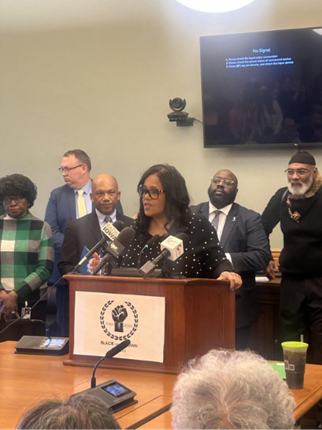
Speaking at the Black and Brown Legislative Caucus

DMU Day at the Capitol
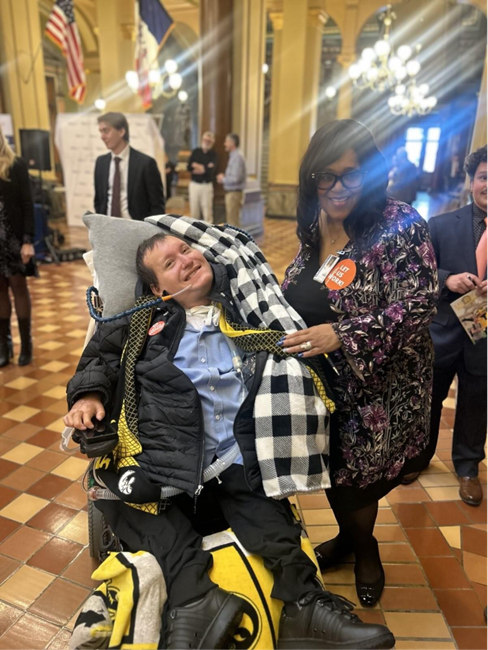
Speaking with key stakeholders at Disability Employment Action and Awareness Day
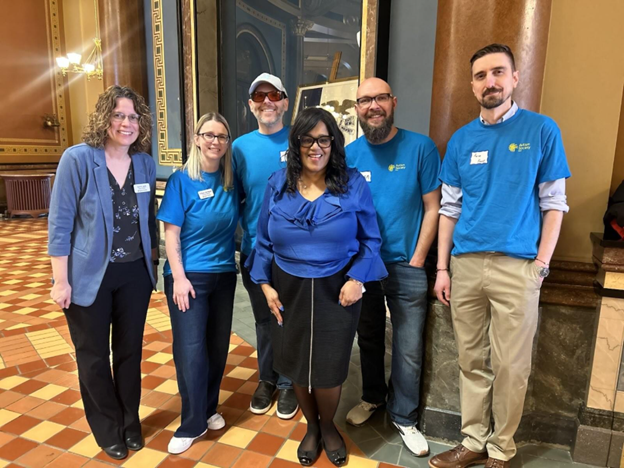
Loved meeting with the Autism Society of Iowa and other advocates
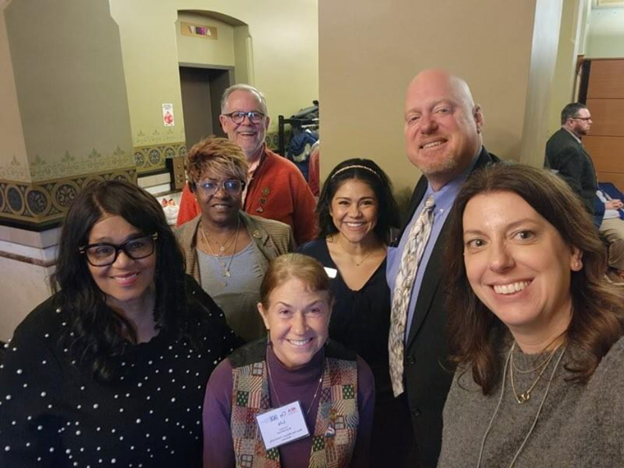
Great meeting with the West Des Moines Superintendent and School Board members
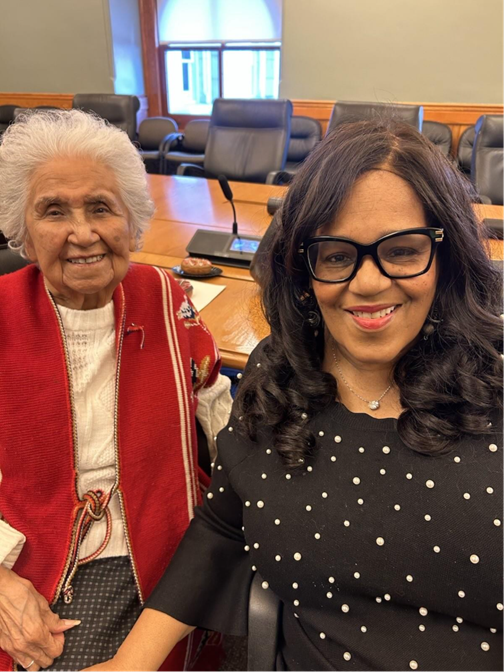
Always a good day to be in the presence of Mary Campos